 Industry Insights
EDLP vs Hi-Lo Pricing: Why Everyday Low Prices Win
A deep dive into why EDLP pricing beats traditional sale-driven strategies for both shoppers and retailers in India's grocery market.
Toll-Free
1800-123-4567
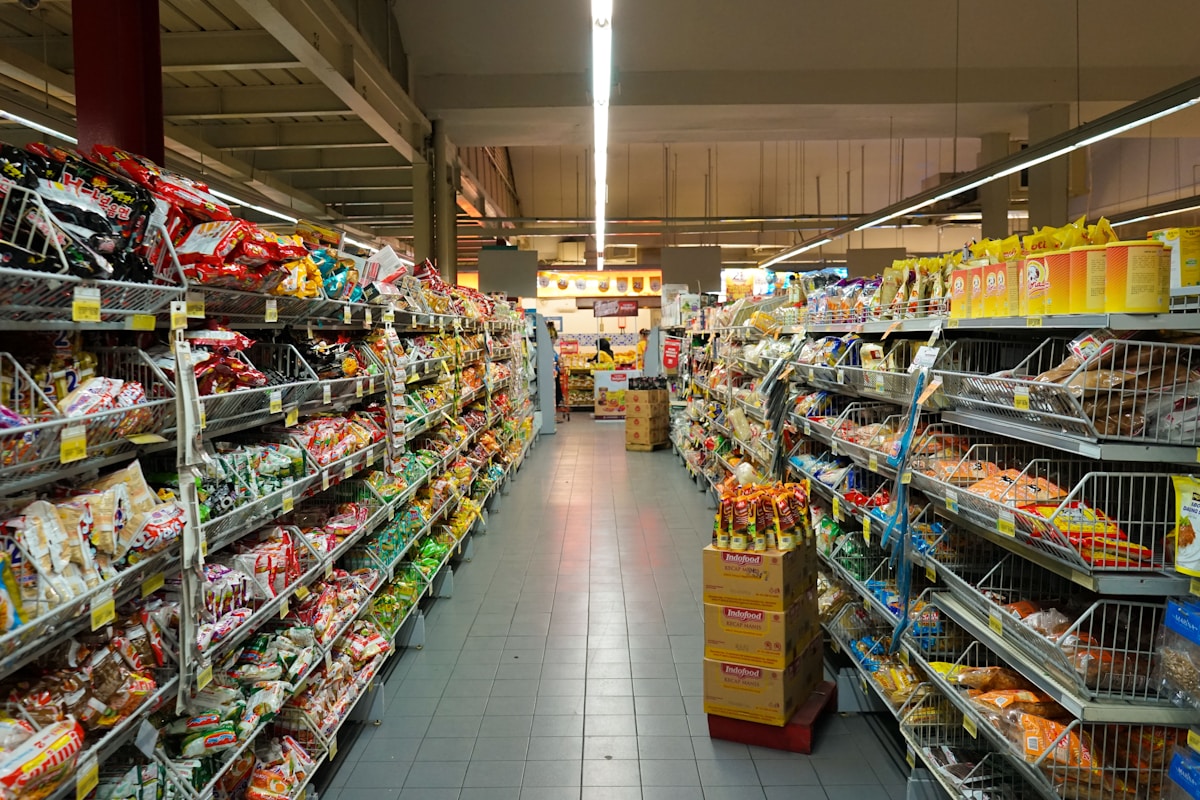
India's grocery and food retail market is valued at over $600 billion, making it the world's fourth largest. Yet organised retail — supermarkets, hypermarkets, and modern trade formats — accounts for only about 10–12% of this massive market. The remaining 88–90% flows through traditional kirana stores and unorganised channels. This gap represents one of the largest retail transformation opportunities anywhere on the planet.
When people think of organised grocery retail in India, national chains like Reliance Retail, DMart, BigBasket, and Flipkart Minutes come to mind. But beneath the national headlines, a quieter and arguably more significant trend is unfolding: the rapid rise of regional supermarket chains that dominate their home territories with strategies that national players often struggle to replicate.
Regional supermarket chains succeed because they understand their customers at a level that distant corporate headquarters cannot. This manifests in several critical ways:
Regional chains typically operate with leaner corporate structures than national players. Benefits include:
Regional chains build deep relationships with local manufacturers, farmers, and distributors. These relationships provide access to local products, fresher produce, and often better terms than what national chains can negotiate for regional specialities. A Rajasthan-based chain can source ghee from local dairies, spices from Jodhpur's masala processors, and namkeen from Bikaner's snack manufacturers — all with freshness, authenticity, and pricing advantages.
Regional chains are seen as part of the local business community, not as faceless corporations. The founder or management team is often known in the market, builds relationships with local institutions, and contributes to the community. This social capital translates into customer preference, employee loyalty, and smoother regulatory relationships.
India's regional supermarket landscape is remarkably diverse. Here are some notable examples:
South India has the highest penetration of organised grocery retail, with several strong regional players. Chains like Nilgiri's (Karnataka), More (multiple states), and Star Market (Kerala) have built loyal customer bases through consistent quality, fresh produce emphasis, and understanding of South Indian culinary traditions.
DMart, which started as a regional chain in Maharashtra, has demonstrated how a focused, value-driven strategy can scale into a national powerhouse. Its EDLP (Everyday Low Pricing) strategy has been studied and emulated across the industry. Smaller regional chains in Gujarat and Maharashtra continue to thrive alongside DMart by serving different customer segments.
North India's organised retail is growing rapidly, with chains expanding beyond Delhi-NCR into tier-2 and tier-3 cities. In Rajasthan, Laxmi Super Mart is building a presence that combines organised retail standards with deep understanding of Rajasthani consumer preferences. The chain's focus on regional products, competitive pricing, and community-oriented retailing exemplifies the regional advantage.
East India remains relatively underpenetrated in organised retail, creating opportunities for regional chains. Emerging players in West Bengal, Odisha, and Bihar are beginning to build formats adapted to local preferences, from fish and fresh meat sections to regional snack categories.
The competitive dynamics between regional and national chains reveal several strategic patterns:
While national chains operate with standardised planograms across regions, successful regional chains customise their assortment for each micro-market. This extends beyond just stocking local products — it includes adjusting pack sizes, price points, and promotional calendars to match local consumption patterns.
Fresh produce, dairy, and bakery are categories where regional chains often outperform national competitors. Shorter supply chains, local sourcing relationships, and better understanding of regional freshness standards give regional operators a tangible quality advantage in these high-frequency categories.
Regional chains are increasingly developing private label products that cater to local tastes. Unlike national private labels that must appeal to a broad audience, regional private labels can be optimised for specific palates — a Rajasthani masala blend, a Bengali sweets range, or a South Indian ready-to-cook mix.
Forward-thinking regional chains are investing in technology for inventory management, customer loyalty, supply chain optimisation, and — increasingly — retail media. Laxmi Super Mart's Laxi Connect platform exemplifies how regional chains are building technology capabilities that rival national players while maintaining their local advantage. Brands can explore these opportunities on our advertising page.
Regional chains are not without challenges:
Industry data reveals compelling trends:
The most interesting trend is convergence. Successful regional chains are carefully expanding into adjacent markets, carrying their operational playbook to new territories. Simultaneously, national chains are investing heavily in localisation — hiring regional merchandising teams, developing local product ranges, and adapting store formats to regional preferences.
This convergence suggests that the future of Indian grocery retail is not a battle between regional and national, but a race to combine scale with localisation. The chains that master both — deep local relevance with operational efficiency — will define the next era of Indian retail.
India's grocery market is large enough for multiple winners. The critical success factor is not store count or national footprint — it is understanding the Indian consumer in all their regional diversity and serving them with the right products, at the right prices, in the right format. For a deeper understanding of how different retail formats serve Indian consumers, explore our analysis of kirana stores, supermarkets, and online grocery models.
 Industry Insights
A deep dive into why EDLP pricing beats traditional sale-driven strategies for both shoppers and retailers in India's grocery market.
 Industry Insights
From kitchen staples to personal care, Indian FMCG brands are matching global quality at better prices. Discover why choosing Made in India grocery products benefits consumers, communities, and the national economy.
 Industry Insights
India's grocery retail market is transforming rapidly. These five trends — from quick commerce and private labels to retail media and AI-driven operations — will define the industry in 2026 and beyond.
Laxmi Super Mart Pvt. Ltd.
42 Tonk Road, C-Scheme
Jaipur, Rajasthan — 302001
Switchboard: +91 141-400-1000
Procurement: +91 141-400-1001
Customer Care: care@laximart.in
Suggestions: suggestion@laximart.in
85+ stores across 12 states — open 7 days a week, 9 AM to 9 PM