First-Time Grocery Shopping — A Complete Beginner's Guide for India
Whether you have just moved out for college, started your first job, or are simply taking over the household shopping for the first time, grocery shopping can feel overwhelming. Hundreds of products, confusing labels, and the pressure to stay within budget — it is a lot to navigate. But with the right approach, grocery shopping becomes a straightforward and even enjoyable routine.
This guide from Laxmi Super Mart breaks down everything a first-time shopper in India needs to know, from building your first grocery list to understanding what makes produce fresh and labels honest.
Step 1 — Start With a Basic Grocery List
Do not walk into a store without a list. Impulse buying is the number one mistake beginners make. Here is a starter list for a single person or couple:
Pantry Staples (Buy Monthly)
| Item | Quantity | Estimated Cost (INR) |
|---|
| Wheat Flour (Atta) | 5 kg | 180–230 |
| Rice (Basmati or Regular) | 5 kg | 250–400 |
| Toor Dal | 1 kg | 130–160 |
| Moong Dal | 1 kg | 120–150 |
| Chana Dal | 1 kg | 100–130 |
| Cooking Oil (Saffola / Fortune) | 5 litres | 650–800 |
| Sugar | 2 kg | 80–100 |
| Salt | 1 kg | 20–25 |
| Tea | 250 g | 100–150 |
Spices (Buy Once, Last 2–3 Months)
- Turmeric Powder: 200 g
- Red Chilli Powder: 200 g
- Coriander Powder: 200 g
- Cumin Seeds (Jeera): 100 g
- Garam Masala: 100 g
- Mustard Seeds: 100 g
Weekly Fresh Items
- Vegetables: Onions (2 kg), tomatoes (1 kg), potatoes (2 kg), seasonal greens
- Fruits: Bananas, apples, or seasonal — 1–2 kg
- Dairy: Milk (as needed), curd (500 g), paneer (200 g)
- Bread: 1 loaf
- Eggs: 1 dozen (if non-vegetarian)
For a comprehensive monthly list, check our detailed monthly grocery list for Indian families.
Step 2 — Choose the Right Store
The type of store you shop at affects both your budget and the quality of products you get:
| Store Type | Pros | Cons |
|---|
| Supermarket (e.g., Laxmi Super Mart) | Wide selection, fixed prices, clean, good quality control | Slightly higher prices on some items |
| Kirana (Neighbourhood Store) | Convenient, credit available, personal service | Limited brands, inconsistent freshness |
| Wholesale Market (Mandi) | Cheapest prices for produce and bulk items | Time-consuming, no quality guarantee |
| Online Grocery (BigBasket, Blinkit) | Home delivery, easy comparison, frequent offers | Cannot check freshness, delivery charges |
For beginners, starting at a well-organised supermarket like Laxmi Super Mart is the best approach. Fixed prices mean no bargaining stress, products are labelled clearly, and staff can help you find items.
Step 3 — How to Pick Fresh Produce
Selecting fresh vegetables and fruits is a skill that develops over time. Here are the basics:
Vegetables
- Tomatoes: Should be firm with smooth skin. Avoid wrinkled or overly soft ones.
- Onions: Look for dry, papery skin with no green sprouts. Heavier onions are better.
- Potatoes: Choose firm potatoes without green spots (green indicates solanine, which is mildly toxic).
- Leafy Greens: Should look vibrant, not wilted or yellowing. Check for insects.
- Capsicum: Should feel heavy for its size and have a glossy surface.
Fruits
- Bananas: Buy slightly green if you want them to last 3–4 days.
- Apples: Should be firm with no bruises. The stem area should smell faintly sweet.
- Mangoes (Season): Smell the stem end — ripe mangoes have a sweet aroma. They should give slightly when pressed.
Golden Rule: Seasonal produce is always cheaper, fresher, and more nutritious. Ask the store staff at Laxmi Super Mart what is currently in season — they are happy to help.
Step 4 — Understanding Product Labels
Reading labels is crucial for making informed choices. Here is what to look for:
- MRP (Maximum Retail Price): This is the maximum you should pay. Many stores sell below MRP.
- Manufacturing Date & Expiry Date: Always check both. Prefer items with the longest shelf life remaining.
- FSSAI Logo & Number: This certifies the product meets food safety standards. Never buy food without it.
- Ingredients List: Ingredients are listed in descending order of quantity. If sugar is the first ingredient in a "health" product, it is not as healthy as it claims.
- Veg / Non-Veg Symbol: Green dot for vegetarian, brown dot for non-vegetarian — mandated by Indian law.
- Net Weight: Check the weight to compare value across brands and pack sizes.
For a deep dive, read our complete guide on how to read food labels in India.
Step 5 — Budgeting Your Grocery Shopping
Here is a realistic monthly grocery budget for different household sizes:
| Household Size | Monthly Budget (INR) | Notes |
|---|
| Single Person | 3,000–4,500 | Basic cooking at home |
| Couple | 5,000–7,000 | Regular home cooking |
| Family of 4 | 8,000–12,000 | Including children's snacks |
Budget Tips for Beginners
- Stick to your list. Impulse purchases add 20–30% to your bill.
- Buy staples in bulk. 10 kg bags of rice and atta are cheaper per kg than 1 kg packs.
- Choose store brands. Store brands are often 15–25% cheaper than national brands for similar quality.
- Track prices. After 2–3 shopping trips, you will know the normal price for each item. This helps you spot genuine deals.
- Avoid pre-cut vegetables. They cost 2–3 times more than whole produce.
Step 6 — Organising Your Kitchen After Shopping
Good storage extends the life of your groceries and reduces waste:
- Refrigerator: Store dairy, leafy greens, and cut fruits immediately. Keep raw and cooked food separate.
- Cool, Dry Place: Atta, rice, dal, and spices go in airtight containers in the kitchen pantry.
- Counter: Onions, potatoes, garlic, and unripe fruits stay outside the fridge.
- Freezer: Bread, frozen peas, paneer (if not using within 2 days), and leftover cooked food.
Common Beginner Mistakes to Avoid
- Buying too much fresh produce — vegetables and fruits have a short shelf life. Buy only what you will use in 4–5 days.
- Ignoring expiry dates — especially on dairy, bread, and packaged snacks.
- Not comparing pack sizes — the bigger pack is not always cheaper per unit. Do the math.
- Shopping when hungry — you will buy more than you need. Eat before you shop.
- Skipping the spice section — basic spices transform simple ingredients into proper Indian meals.
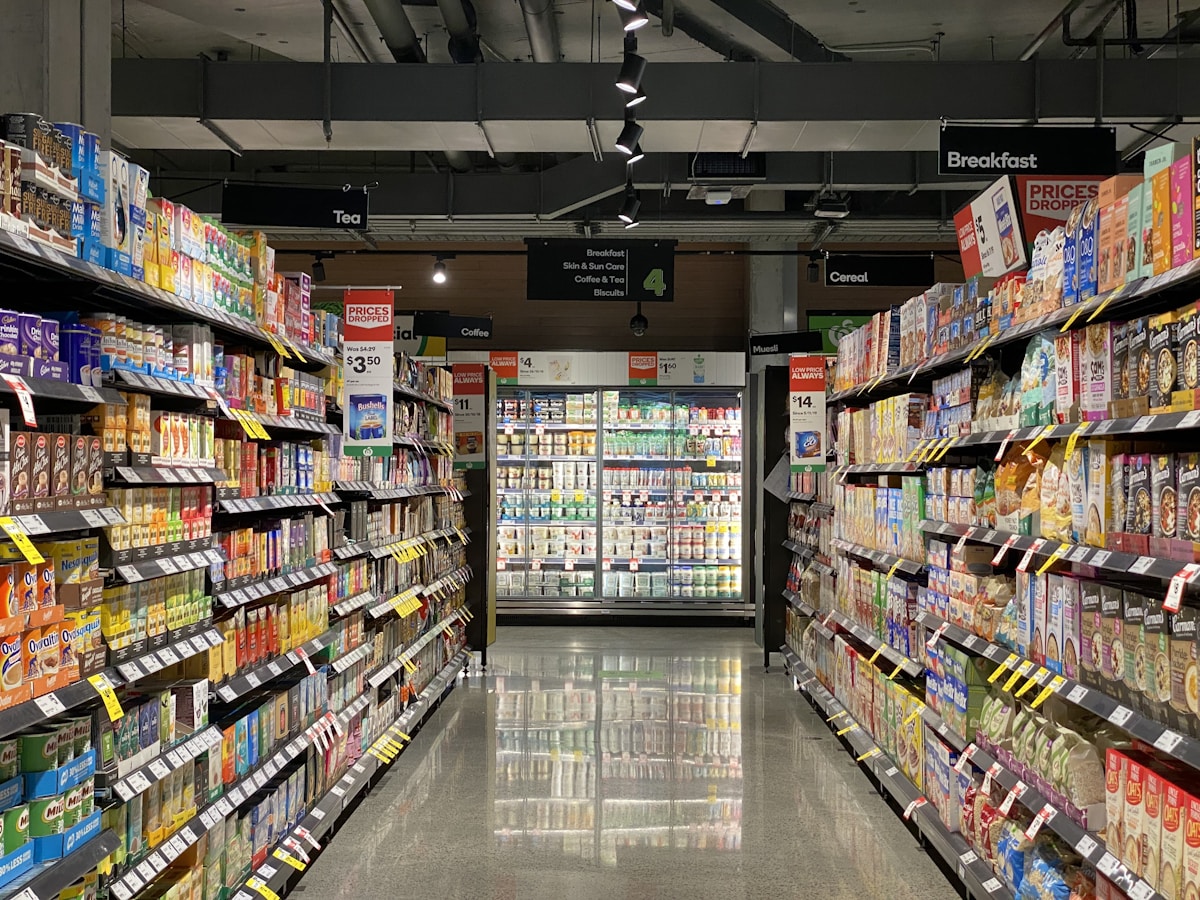
Understanding Indian Grocery Store Layout
Most Indian supermarkets, including Laxmi Super Mart, follow a similar layout that is designed to guide your shopping journey. Understanding this layout makes your trip more efficient:
Typical Store Flow
- Entrance / Fresh Produce: Fruits and vegetables are usually the first section you encounter. This is intentional — fresh, colourful produce creates a positive first impression.
- Dairy Section: Typically near the produce area or along the side wall, where refrigeration units are installed. Milk, curd, paneer, cheese, and butter are here.
- Staples Aisle: Rice, atta, dal, sugar, salt, and cooking oil. This is where you will spend the most time on your first visit.
- Spices & Masala: Usually a dedicated aisle with brands like MDH, Everest, Catch, and Tata Sampann.
- Packaged Foods: Biscuits, namkeen, instant noodles, breakfast cereals, jams, and sauces.
- Beverages: Tea, coffee, juices, cold drinks, and water.
- Frozen Foods: Frozen vegetables, parathas, and ready meals — useful for busy weeknights.
- Personal Care & Household: Soaps, detergents, cleaning supplies — usually the final section before the billing counter.
The Checkout Strategy
Beginners often feel pressured at the billing counter. Here are some tips:
- Unload items in the order you want them bagged — heavy items first, fragile items last.
- Keep your loyalty card or phone number ready for reward points.
- Double-check that the scanned prices match the shelf prices.
- Bring your own reusable bags — many stores charge for plastic bags, and it is better for the environment.
Building a Spice Collection From Scratch
If you are setting up a kitchen for the first time, the spice section can be overwhelming. Here is a phased approach to building your spice collection:
Phase 1 — The Essentials (Week 1)
These six spices are needed for nearly every Indian meal: turmeric powder, red chilli powder, coriander powder, cumin seeds, garam masala, and mustard seeds. With just these, you can cook dal, sabzi, and basic rice dishes.
Phase 2 — Expanding Your Range (Month 1)
Add these as you attempt more recipes: whole cumin, bay leaves, cinnamon sticks, cloves, black cardamom, kasuri methi (dried fenugreek leaves), and hing (asafoetida). These unlock dishes like biryani, chole, and rajma.
Phase 3 — The Complete Collection (Month 2–3)
Round out your collection with: black pepper, nutmeg, mace, fennel seeds, ajwain, dried red chillies, star anise, and specialty masalas like pav bhaji masala, chana masala, and kitchen king. At this point, you can attempt virtually any Indian recipe.
Buy small quantities (50–100 g) of each spice initially. Whole spices last longer than ground ones — consider buying whole and grinding at home for the freshest flavour. At Laxmi Super Mart, the spice aisle is organised by brand and type, making it easy to find exactly what you need.
Your First Shopping Trip Checklist
Here is a simple checklist to take on your first visit to Laxmi Super Mart or any supermarket:
- Write your list before leaving home (use the tables above as a starting point).
- Set a budget and bring cash or a UPI-ready phone.
- Start with pantry staples — they are the foundation of your kitchen.
- Move to fresh produce — spend time selecting carefully.
- Check expiry dates on every packaged item.
- Ask staff for help — there is no shame in it, and store staff are knowledgeable.
- Review your bill before leaving the store.
Grocery shopping is a life skill that improves with practice. Within a few trips to Laxmi Super Mart, you will develop your own preferences, know exactly where items are located, and build a routine that works for your schedule and budget. Welcome to the world of self-sufficient living!
Frequently Asked Questions
How much should a beginner budget for monthly groceries in India?
A single person should budget INR 3,000–4,500 per month for basic home cooking. A couple needs INR 5,000–7,000, and a family of four should plan for INR 8,000–12,000. These estimates cover staples, fresh produce, dairy, and basic spices.
What are the essential grocery items for a first-time shopper?
Start with atta (5 kg), rice (5 kg), three types of dal (1 kg each), cooking oil (5 litres), sugar, salt, tea, basic spices (turmeric, red chilli, coriander, cumin, garam masala), and weekly fresh vegetables, fruits, and dairy.
How do I pick fresh vegetables at the grocery store?
Choose firm tomatoes with smooth skin, onions with dry papery skin and no green sprouts, potatoes without green spots, vibrant leafy greens without wilting, and capsicums that feel heavy with a glossy surface. Avoid any produce that is wrinkled, soft, or has visible damage.
Should I shop at a supermarket or a kirana store as a beginner?
Beginners should start at a supermarket like Laxmi Super Mart. Fixed prices eliminate bargaining stress, products are clearly labelled, the store is organised by category, and staff can help you find items. Once you are comfortable, you can mix in kirana stores and online ordering.
What is the most common mistake first-time grocery shoppers make?
The biggest mistake is shopping without a list, which leads to impulse buying and can inflate your bill by 20–30%. Other common errors include buying too much fresh produce (which spoils), ignoring expiry dates, and shopping on an empty stomach.
Find Your Nearest Laxmi Super Mart
85+ stores across Rajasthan and India with everyday low prices on 10,000+ products.
Find a Store

Laxmi Mart Editorial
The Laxmi Mart Editorial team brings you the latest insights on grocery shopping, product guides, and smart living tips from India's trusted supermarket chain with 85+ stores across Rajasthan.
 Shopping Guides
 Shopping Guides
 Shopping Guides