Why Starting a Kirana Store in Rajasthan Is a Smart Move
India has over 12 million kirana stores, and Rajasthan alone accounts for a significant share of this massive retail network. Despite the rise of organised retail and e-commerce, kirana stores continue to command nearly 80% of India's grocery market. If you are considering opening a kirana store in Rajasthan, you are entering a business with proven demand, low barriers to entry, and strong community loyalty.
Rajasthan's unique demographics make it especially attractive. With a mix of urban hubs like Jaipur, Jodhpur, and Udaipur, along with hundreds of semi-urban and rural towns, the state offers diverse opportunities for retailers of every scale. Whether you plan to open a small neighbourhood shop in Bikaner or a mid-sized store in Jaipur, this guide will walk you through every step of the process.
Step 1: Research Your Local Market
Before investing a single rupee, spend time understanding the area where you plan to set up shop. Visit existing kirana stores in the neighbourhood and observe their product range, pricing, footfall, and customer profiles. Key questions to answer include:
- What products are in highest demand locally?
- Are there gaps in the current supply — for example, no store stocking premium brands or organic products?
- What is the average household income in the area?
- How many competing stores operate within a 1-km radius?
In Rajasthan, consumer preferences can vary significantly by region. Stores in Marwar might see heavy demand for bajra atta, moth dal, and ker-sangri, while those in Jaipur may need a wider range of packaged snacks, beverages, and personal care items. Understanding these local preferences is critical to building a profitable inventory.
Step 2: Licences and Legal Requirements
Starting a kirana store in Rajasthan requires a few essential licences:
- Shop and Establishment Act Registration: Apply through the Rajasthan Labour Department. This is mandatory for any retail business.
- FSSAI Licence: If your annual turnover is below ₹12 lakh, a basic FSSAI registration suffices. Above that threshold, you need a state licence.
- GST Registration: Required if your turnover exceeds ₹40 lakh (₹20 lakh for certain categories).
- Trade Licence: Issued by the local municipal body — Nagar Nigam or Nagar Palika depending on your city or town.
- Weighing and Measures Licence: If you sell loose items by weight.
The total cost of all licences typically ranges from ₹5,000 to ₹15,000, and most can be applied for online through Rajasthan's e-Mitra portal or the respective department websites.
Step 3: Investment and Financial Planning
The initial investment for a kirana store in Rajasthan varies widely based on location and scale:
| Store Size | Location Type | Estimated Investment |
|---|
| Small (100-200 sq ft) | Rural/Semi-urban | ₹1.5–3 lakh |
| Medium (200-500 sq ft) | Semi-urban/Urban | ₹3–8 lakh |
| Large (500-1000 sq ft) | Urban | ₹8–20 lakh |
This includes rent deposit, interior setup, shelving and fixtures, initial inventory, and a billing system. Many new store owners underestimate working capital needs. We recommend keeping at least two months of operating expenses in reserve to handle slow periods, delayed payments, and unexpected costs.
For financing, explore the Pradhan Mantri Mudra Yojana (PMMY), which offers loans up to ₹10 lakh for small businesses without collateral. Several Rajasthan state schemes also support first-time entrepreneurs in retail.
Step 4: Store Setup and Layout
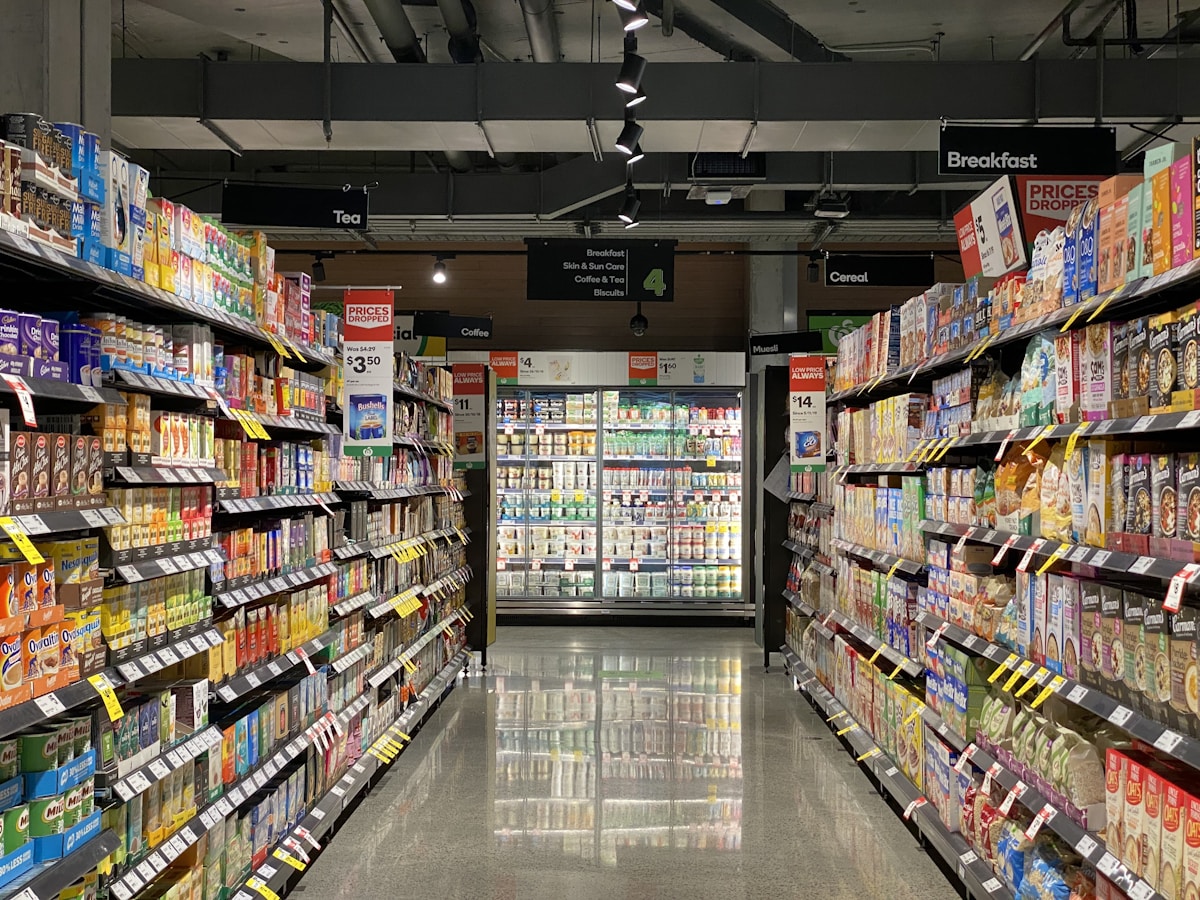
An organised, clean store layout directly impacts your sales. Even in a small space, smart shelving can maximise product visibility and customer convenience. Follow these principles:
- Place high-margin impulse items like chocolates, chips, and small snacks near the billing counter.
- Stock daily essentials — atta, rice, dal, oil, sugar — in an easily accessible section.
- Keep personal care and cleaning products in a separate, well-labelled section.
- Ensure adequate lighting and ventilation, especially in Rajasthan's hot climate.
- Invest in a basic refrigerator for dairy, cold drinks, and perishables.
At Laxmi Super Mart, we have refined store layouts across our locations to maximise customer flow and basket size. New kirana owners can learn from organised retail formats and apply these principles on a smaller scale.
Step 5: Building Your Product Inventory
Your initial inventory should focus on fast-moving consumer goods (FMCG) that guarantee quick turnover. A typical Rajasthan kirana store should stock:
- Staples: Atta, rice, dal varieties, sugar, salt, cooking oil
- Spices: Haldi, mirchi, dhaniya, jeera, garam masala — consider local brands alongside national ones
- Packaged Foods: Biscuits, namkeen, noodles, ready-to-eat items
- Beverages: Tea, coffee, soft drinks, packaged water
- Personal Care: Soaps, shampoos, toothpaste, detergent
- Dairy: Milk, curd, paneer, ghee — Saras dairy products are extremely popular in Rajasthan
For a detailed product checklist, read our guide on Top 10 FMCG Products Every Kirana Must Stock.
Step 6: Sourcing and Wholesale Partnerships
Your profit margins depend heavily on how and where you source products. Traditional options include visiting local wholesale markets (mandis) in cities like Jaipur, Jodhpur, or Kota. However, these involve travel time, inconsistent pricing, and limited product range.
Modern B2B wholesale platforms have transformed sourcing for kirana stores. MyKiranaBuddy, available on the Google Play Store, allows store owners to order wholesale groceries directly from their smartphone. Benefits include:
- Competitive wholesale pricing with transparent margins
- Doorstep delivery across Rajasthan
- Digital invoicing and order tracking
- Access to a wider product catalogue than most local wholesalers
Using a platform like MyKiranaBuddy can save kirana owners 10–15% on procurement costs compared to traditional wholesale channels.
Step 7: Technology and Billing
Even a small kirana store benefits from basic technology adoption. At minimum, set up:
- A UPI payment system (Google Pay, PhonePe, or Paytm) — digital payments now account for over 40% of transactions even in tier-2 and tier-3 cities.
- A simple billing software or POS system. Several free and low-cost options are available for small retailers.
- An inventory tracking system, even if it starts as a simple spreadsheet.
Laxmi Super Mart uses advanced retail technology across its stores, but the underlying principle applies at every scale: tracking what sells and what does not helps you make smarter purchasing decisions and reduce waste.
Step 8: Marketing Your Kirana Store
Local marketing does not need a big budget. Effective strategies for kirana stores in Rajasthan include:
- WhatsApp Business: Create a catalogue, share daily offers, and take orders via WhatsApp.
- Home Delivery: Offering free delivery within 1-2 km can dramatically increase your customer base.
- Loyalty Programs: Simple stamp cards or monthly discounts for repeat customers build retention.
- Local Partnerships: Connect with nearby offices, hostels, and PG accommodations for bulk orders.
- Festival Offers: Rajasthan's numerous festivals — Diwali, Teej, Gangaur, Makar Sankranti — are prime sales opportunities.
Step 9: Managing Cash Flow and Growth
Cash flow management is the single biggest challenge for kirana store owners. Key practices include:
- Limit credit to trusted customers and set clear repayment timelines.
- Negotiate favourable payment terms with suppliers — platforms like MyKiranaBuddy often offer flexible payment options.
- Track daily sales and expenses without fail.
- Reinvest profits into expanding your product range and improving store infrastructure.
Many successful kirana owners in Rajasthan have gradually expanded from a single small shop to multiple locations. The key is disciplined financial management from day one.
Common Mistakes to Avoid
Based on conversations with hundreds of kirana store owners across Rajasthan, here are the most common pitfalls:
- Overstocking slow-moving items: Start with fast-moving products and expand based on actual demand.
- Ignoring expiry dates: FSSAI regulations are strict, and expired products can lead to penalties and lost customer trust.
- Excessive credit: Offering too much udhar (credit) without tracking can cripple your cash flow.
- Neglecting store cleanliness: A clean, well-organised store attracts more customers than one with dusty shelves.
- Resisting technology: Even basic digital tools can give you a significant edge over traditional competitors.
The Road Ahead
India's grocery retail market is expected to exceed $600 billion by 2027, and kirana stores will continue to be the backbone of this ecosystem. By combining traditional relationship-based retail with modern sourcing, technology, and marketing, a kirana store in Rajasthan can be a highly profitable and sustainable business.
Whether you are a first-time entrepreneur or an experienced retailer looking to open a new location, the opportunity is immense. Start with solid research, build strong supplier relationships through platforms like MyKiranaBuddy, and focus relentlessly on customer service.
For more insights on the Indian grocery retail landscape, visit the Laxmi Super Mart About page to learn how organised and unorganised retail can complement each other in building a stronger market for everyone.
Frequently Asked Questions
How much investment is needed to open a kirana store in Rajasthan?
Investment ranges from ₹1.5 lakh for a small rural shop to ₹20 lakh for a large urban store. This covers rent deposit, fixtures, initial inventory, and a billing system. Keep at least two months of operating expenses as working capital reserve.
What licences are required to start a kirana store in Rajasthan?
You need a Shop and Establishment Act registration, FSSAI licence or registration, GST registration (if turnover exceeds ₹40 lakh), a trade licence from the local municipal body, and a weighing and measures licence for selling loose items.
How can kirana store owners in Rajasthan source products at wholesale prices?
Owners can visit local wholesale markets (mandis) or use B2B platforms like MyKiranaBuddy, available on the Google Play Store. Digital platforms often offer better pricing, doorstep delivery, and a wider product range than traditional wholesalers.
Is opening a kirana store still profitable in 2026?
Yes. Kirana stores still handle nearly 80% of India's grocery sales. With smart inventory management, digital payments, efficient sourcing, and strong customer relationships, profit margins of 10–20% are achievable depending on product mix and location.
Find Your Nearest Laxmi Super Mart
85+ stores across Rajasthan and India with everyday low prices on 10,000+ products.
Find a Store

Laxmi Mart Editorial
The Laxmi Mart Editorial team brings you the latest insights on grocery shopping, product guides, and smart living tips from India's trusted supermarket chain with 85+ stores across Rajasthan.
 B2B & Wholesale